
Mobile phone:+86-15395152932
mail:sale@oamisys.com
Address:Electronic Information Industrial Park, Shunyi District, Beijing City
In the rapidly evolving landscape of automotive manufacturing, the assembly line remains the beating heart of production excellence. Our electric vehicle assembly line represents a sophisticated integration of modular design principles, lean manufacturing methodologies, and precision engineering protocols that define modern automotive production.
Linear Progressive Layout. The assembly line depicted in our facility follows a linear progressive layout, a configuration that has proven its efficiency since the dawn of mass production while being continuously refined through decades of industrial innovation. The line operates on a continuous flow basis, where vehicle chassis advance through sequential workstations, each dedicated to specific assembly phases. This structured progression ensures that every component, from powertrain modules to interior trim, is installed at the optimal point in the manufacturing sequence.
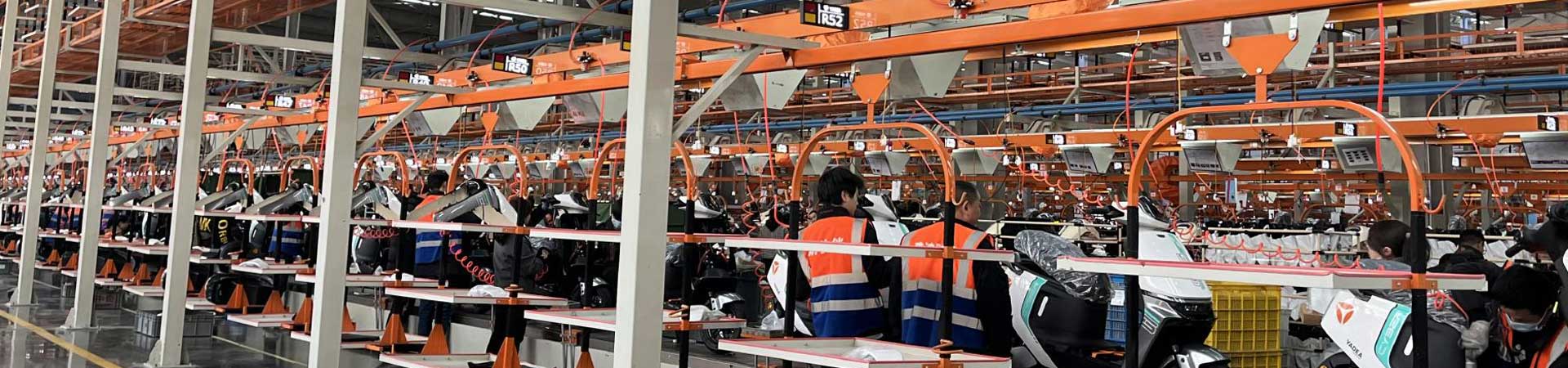
Elevated Conveyor Infrastructure. The physical infrastructure of our line features an elevated conveyor system with standardized spacing between stations, allowing for synchronized movement of vehicles at calculated intervals. Overhead gantry systems run parallel to the production flow, delivering pre-sorted components to each workstation precisely when needed. This overhead logistics network eliminates floor clutter and creates an unimpeded workspace for assembly technicians, directly contributing to both safety metrics and operational efficiency.
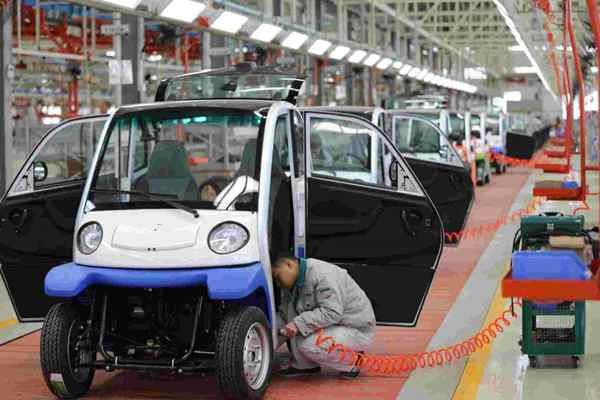
Color-Coded Floor Management. The flooring system utilizes color-coded epoxy coatings that serve multiple functional purposes. The primary orange pathway defines the vehicle movement corridor, while adjacent gray zones designate pedestrian walkways and material staging areas. This visual management system, rooted in 5S workplace organization principles, enables immediate identification of proper zones and reduces the cognitive load on operators, allowing them to focus entirely on their assembly tasks.
Planned Sequence Balance. Our EV assembly process follows a meticulously planned sequence that balances manual craftsmanship with automated precision. The production begins with the marriage of the battery pack to the vehicle platform, a critical operation that demands exacting tolerances and specialized lifting equipment. Following this foundational step, the line progresses through powertrain installation, where the electric motor and inverter assembly are mounted and connected to the vehicle’s electronic architecture.
Body-in-White Integration. The body-in-white stage, where the vehicle’s structural shell is assembled and painted, precedes the final assembly line shown in our facility. Here, the painted body shell meets the rolling chassis, initiating the trim and final assembly phase. This is where the vehicle truly takes shape as a complete product.
Detachable Door Strategy. Door assembly represents one of the most labor-intensive operations on the line. As visible in our production environment, doors are temporarily removed from the vehicle body to facilitate interior access and then reattached after interior component installation. This detachable door strategy, a standard practice in premium automotive manufacturing, provides technicians with unobstructed access to the cabin space, enabling precise installation of dashboard assemblies, wiring harnesses, HVAC systems, and seating configurations.
High-Voltage Wiring Protocols. The wiring harness installation follows a predetermined routing path, with connectors color-coded and keyed to prevent misassembly. Given the high-voltage nature of electric vehicle systems, our technicians undergo specialized certification for high-voltage safety protocols, ensuring that every electrical connection meets both functional and safety requirements.
Embedded Verification Steps. Quality control is not a terminal inspection point in our process. It is an embedded function at every workstation. Each assembly station incorporates built-in quality verification steps, where technicians confirm torque specifications, connection integrity, and component fitment before releasing the vehicle to the next phase. Digital torque wrenches with data logging capabilities record every fastening operation, creating a comprehensive traceability record for each vehicle.
Poka-Yoke Safeguards. Mistake-proofing devices are integrated throughout the line, preventing incorrect component installation or omission of critical fasteners. These mechanical and electronic safeguards ensure that assembly errors are caught at the source rather than downstream, where correction costs multiply exponentially.
Lean Inventory Approach. The assembly line operates on a just-in-time material delivery system, where components arrive at each workstation in sequenced order, synchronized with the production schedule. This lean inventory approach minimizes warehouse space requirements and reduces capital tied up in work-in-progress inventory. Material handling equipment, including the mobile tool carts visible along the line, is standardized and positioned within defined reach zones to minimize operator movement and maximize value-added time.
Sequenced Parts Delivery. Component kits are prepared in an off-line sequencing area and delivered to the line in the exact order of vehicle production. This sequenced parts delivery system eliminates the need for operators to search for or select components, reducing variability and potential for error.
Optimal Reach Envelope. Workstation design follows ergonomic principles that prioritize operator comfort and efficiency. Assembly tasks are positioned within the optimal reach envelope, minimizing bending, stretching, and repetitive strain. Adjustable-height platforms and rotating fixtures allow technicians to access vehicle components from optimal angles, reducing physical fatigue over the course of a shift.
Precision Tool Systems. The pneumatic tool systems, connected via retractable coiled hoses, provide consistent power delivery while maintaining workspace flexibility. These tools are selected for their precision and reliability, with regular calibration schedules ensuring consistent performance.
Modular Reconfiguration. Our assembly line architecture is designed for modularity and reconfiguration. The standardized workstation spacing and universal fixture interfaces allow for rapid line rebalancing when production volumes change or new vehicle variants are introduced. This flexibility is essential in the EV market, where product cycles are shorter and platform variations are more numerous than in traditional automotive manufacturing.
Mixed-Model Sequencing. The line can accommodate multiple vehicle models simultaneously through mixed-model sequencing, with the production control system automatically adjusting work instructions and component deliveries based on the specific vehicle approaching each station.
◆ Layout Configuration: Linear progressive with continuous flow basis and sequential workstation dedication
◆ Conveyor System: Elevated design with standardized station spacing and synchronized vehicle movement at calculated intervals
◆ Logistics Network: Overhead gantry systems delivering pre-sorted components parallel to production flow
◆ Floor Management: Orange vehicle corridor with gray pedestrian walkways using color-coded epoxy coatings for 5S compliance
◆ Starting Operation: Battery pack marriage to vehicle platform requiring exacting tolerances and specialized lifting equipment
◆ Body Integration: Painted shell meeting rolling chassis at trim and final assembly initiation point
◆ Door Handling: Temporary removal strategy providing unobstructed cabin access for interior component installation
◆ Wiring Protocol: Color-coded and keyed connectors with high-voltage safety certification for all electrical connections
◆ Quality Approach: Embedded verification at every station with digital torque wrench data logging for full traceability
◆ Error Prevention: Poka-yoke devices catching incorrect installation at source rather than downstream
◆ Delivery Method: Just-in-time sequenced parts arrival synchronized with production schedule
◆ Inventory Strategy: Minimized warehouse requirements with reduced work-in-progress capital commitment
◆ Ergonomic Design: Optimal reach envelope positioning with adjustable-height platforms and rotating fixtures
◆ Tool Systems: Pneumatic tools with retractable hoses and regular calibration schedules
◆ Reconfiguration Capability: Standardized spacing and universal fixture interfaces for rapid line rebalancing
◆ Model Flexibility: Mixed-model sequencing with automatic work instruction adjustment per vehicle variant
Our electric vehicle assembly line represents the convergence of proven manufacturing science and cutting-edge automotive technology. Through disciplined process engineering, integrated quality systems, and continuous improvement culture, we deliver vehicles that meet the exacting standards of the modern electric mobility market.
Every element of this production system, from the color-coded floor markings to the sequenced material delivery, from the ergonomic workstations to the digital traceability systems, serves a singular purpose: to build exceptional electric vehicles with consistency, efficiency, and uncompromising quality.
This is not merely a production facility. It is a precision-engineered system where human expertise and industrial methodology combine to create the transportation solutions of tomorrow.
Previous:Integrated Patrol Vehicle Assembly Line Shortens Offline Cycle Greatly!
Next: