
Mobile phone:+86-15395152932
mail:sale@oamisys.com
Address:Electronic Information Industrial Park, Shunyi District, Beijing City
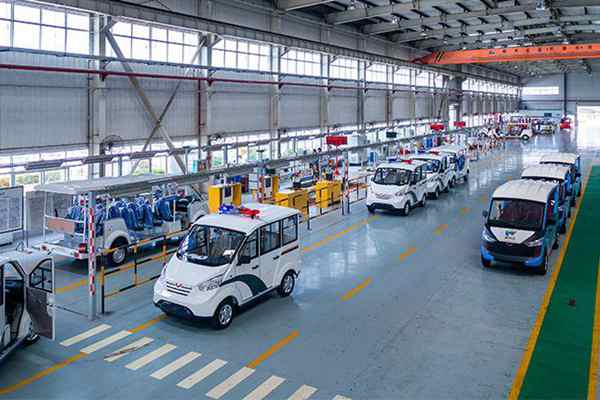
The image captures a spacious, well-lit patrol vehicle production line housed within a modern industrial facility, illustrating how contemporary production systems accommodate the unique demands of low-speed electric vehicle manufacturing. This line represents a hybrid manufacturing model that bridges automotive assembly traditions with the specialized requirements of municipal patrol, security, and campus transport vehicles.
Ground-Level Conveyor Configuration. The production system employs a ground-level, vehicle-moving conveyor configuration where completed chassis and body units progress along painted lane markings on a polished concrete floor. Unlike traditional automotive assembly lines that suspend bodies from overhead carriers or move them on fixed-track conveyors, this design allows vehicles to traverse the line under their own power or via low-profile tow systems.
Flexibility for Varied Configurations. This approach offers significant flexibility for vehicles of varying wheelbases and body configurations, which is essential when a single line must accommodate compact two-seater patrol cars, four-door security vehicles, and open-bed utility variants visible in the image.
Facility Utilization. The longitudinal orientation of the line maximizes the use of the facility’s considerable depth, with natural light flooding through clerestory windows along the entire length. This daylighting strategy reduces energy consumption while improving operator visual acuity for detailed assembly and inspection tasks. The high-bay steel truss ceiling accommodates overhead crane systems for major sub-assembly delivery, including battery packs, body-in-white modules, and pre-wired dashboard assemblies.
Visual Boundary Definition. Assembly stations are demarcated by yellow safety barriers and painted floor markings, creating clear visual boundaries between active work zones and vehicle travel paths.
Generous Station Spacing. The spacing between stations appears generous compared to high-volume automotive lines, reflecting the lower production volumes and higher work content per station typical of specialized vehicle manufacturing. Each station likely encompasses multiple assembly operations that would be subdivided across several stations in a mass-production environment.
Logical Build Progression. The line sequencing follows a logical vehicle build progression. Near the line’s origin, partially assembled chassis with exposed drivetrain components suggest early-stage powertrain installation. Mid-line stations show vehicles with completed body shells but missing interior trim, indicating progression through body mounting, glazing, and sealing operations. Terminal stations display fully painted and trimmed vehicles, where final electrical commissioning, lighting installation, and patrol-specific equipment mounting occur.
Distinct Assembly Challenges. As an electric vehicle line, this production system must address assembly challenges distinct from conventional internal combustion manufacturing. Battery pack installation, likely occurring at a dedicated heavy-lift station, requires precise positioning and robust mechanical fastening to withstand crash and vibration loads.
Specialized Safety Protocols. The high-voltage nature of EV powertrains demands specialized training for assembly technicians, insulated tooling, and stringent lockout/tagout protocols during testing and commissioning.
Visible Electrical Progression. The image reveals vehicles in various stages of electrical system completion. Some units display exposed wiring harnesses awaiting connection, while others show fully installed light bars, emergency lighting, and communication antennae characteristic of patrol vehicle specifications. This variation illustrates the line’s capability to handle both standard production configurations and customer-specific equipment packages.
Distributed Quality Control. Rather than concentrating all verification at a terminal inspection point, quality control is distributed along the line. Each station incorporates visual checks, dimensional verification, and functional tests appropriate to the operations performed.
Critical Verification Points. For electric patrol vehicles, critical verification points likely include high-voltage isolation testing after battery installation, controller communication checks following powertrain integration, brake system validation after hydraulic or regenerative brake assembly, and full vehicle dynamometer testing for speed calibration and range verification.
Overhead Gantry Support. The overhead gantry crane visible in the facility supports not only material handling but also potential rework and major sub-assembly replacement operations. Should a vehicle fail end-of-line testing, this lifting infrastructure enables efficient access to underbody components without disrupting the main line flow.
Prioritized Comfort and Safety. The production environment prioritizes operator comfort and safety. The wide aisle spacing between parallel line segments allows material delivery vehicles and personnel to move freely without interfering with production traffic. The polished floor surface, while aesthetically clean, likely incorporates anti-slip treatment in work zones to prevent accidents during wet conditions.
Varied Working Heights. Assembly stations appear designed for varied working heights. Some operations are conducted at standing level for underbody and wheel well work. Others use elevated platforms for roof-mounted equipment installation. The absence of overhead conveyor chains and the spacious ceiling height contribute to an open, non-claustrophobic working environment that reduces operator fatigue during extended shifts.
Visible Product Mix. The visible product mix, including compact enclosed patrol cars, open utility vehicles, and larger transport units, demonstrates the line’s multi-model capability.
Programmable Adaptability. This flexibility is achieved through programmable assembly fixtures, modular powertrain mounting systems, and standardized electrical architectures that accommodate varying battery capacities and motor configurations. The ability to intermix different models on a single line, rather than dedicating separate lines to each variant, maximizes capital utilization and responds efficiently to fluctuating demand patterns across different patrol vehicle segments.
Pull-Based Scheduling. The line operates under a pull-based production schedule driven by municipal procurement cycles and fleet replacement programs. Unlike consumer automotive manufacturing with continuous high-volume demand, patrol vehicle production often follows batch-oriented patterns with seasonal peaks.
Accommodating Fluctuations. The line’s design, with its flexible pacing and buffer capacity between stations, accommodates these demand fluctuations without requiring workforce rebalancing or overtime dependency.
Digital Monitoring Infrastructure. Digital production monitoring systems, suggested by the control panels and displays visible at station intervals, track build progress, capture quality data, and trigger material replenishment signals. This information infrastructure enables real-time visibility into line status for production planners and customer service representatives managing delivery commitments.
Conveyor Type. Ground-level vehicle-moving system using painted lane markings on polished concrete floor.
Drive Method. Self-powered traversal or low-profile tow systems accommodating varying wheelbases and body configurations.
Vehicle Mix. Compact two-seater patrol cars, four-door security vehicles, and open-bed utility variants on a single line.
Facility Lighting. Clerestory windows providing natural daylight along the entire line length, reducing energy consumption.
Ceiling Structure. High-bay steel truss supporting overhead crane systems for battery packs, body modules, and dashboard assemblies.
Station Demarcation. Yellow safety barriers and painted floor markings creating clear visual boundaries between work zones.
Station Spacing. Generous intervals reflecting lower production volumes and higher work content per station.
Build Sequence. Chassis and powertrain installation, body mounting and glazing, final trim and patrol equipment mounting.
Powertrain Type. Electric with dedicated heavy-lift battery pack installation station.
Safety Protocols. Insulated tooling, lockout/tagout procedures, and specialized high-voltage training for assembly technicians.
Quality Distribution. In-process visual checks, dimensional verification, and functional tests at each station.
Critical Tests. High-voltage isolation, controller communication, brake validation, and dynamometer speed calibration.
Working Heights. Standing level for underbody work, elevated platforms for roof-mounted equipment.
Model Flexibility. Programmable fixtures, modular powertrain mounts, and standardized electrical architectures.
Production Schedule. Pull-based system driven by municipal procurement cycles with seasonal peak accommodation.
Monitoring Infrastructure. Control panels and displays providing real-time build progress and quality data visibility.
This patrol vehicle production line exemplifies how specialized vehicle manufacturing adapts automotive production principles to niche market requirements. The integration of electric powertrain technology, the accommodation of diverse body configurations, and the emphasis on flexible, moderate-volume production create a manufacturing system that delivers mission-critical vehicles to security and municipal operators.
The line’s spacious, well-organized environment reflects an understanding that in specialized manufacturing, efficiency derives not from maximum speed but from optimal flow, thorough quality integration, and responsive adaptability to customer-specific requirements.
Previous:Electric bicycle production line: Standardized assembly, efficiently adapted to commuting needs
Next:What Intelligent Supporting Equipment Comes With Energy-saving EV Assembly Line?